

| City/Town: • Montgomery |
| Location Class: • Religious |
| Built: • 1947 | Abandoned: • Unknown |
| Status: • Abandoned |
| Photojournalist: • David Bulit |
History of Montgomery’s Memorial Presbyterian Church
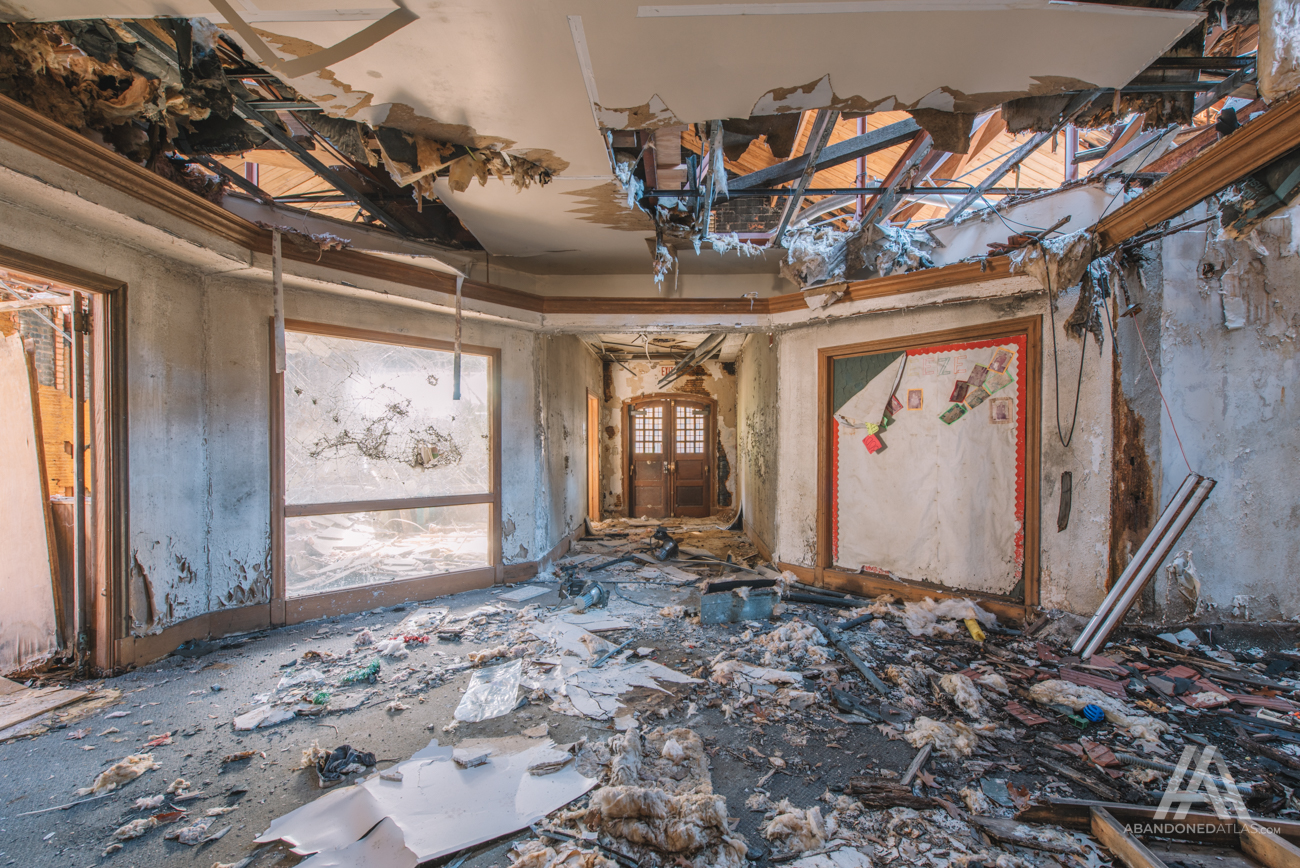
The Bellingrath Education Building is an abandoned, modest-sized former Sunday school building located on the premises of the Memorial Presbyterian Church. Located in Montgomery, Alabama, the church was established on June 9, 1946. It began with fifty-one charter members from First Presbyterian Church, one of Montgomery’s founding congregations. The first worship service was held on Mother’s Day 1946 in the auditorium of Sidney Lanier High School, led by Rev. Cecil Lawter. That same year, the congregation officially called Rev. Lawter to serve as their first pastor.
Launched as a “seed church,” Memorial Presbyterian broke ground on a building program on five acres along South Court Street, land generously donated by the Bellingrath family and supported by financial gifts from the men of First Presbyterian.
William Bellingrath, Philanthropist and Coca-Cola Pioneer
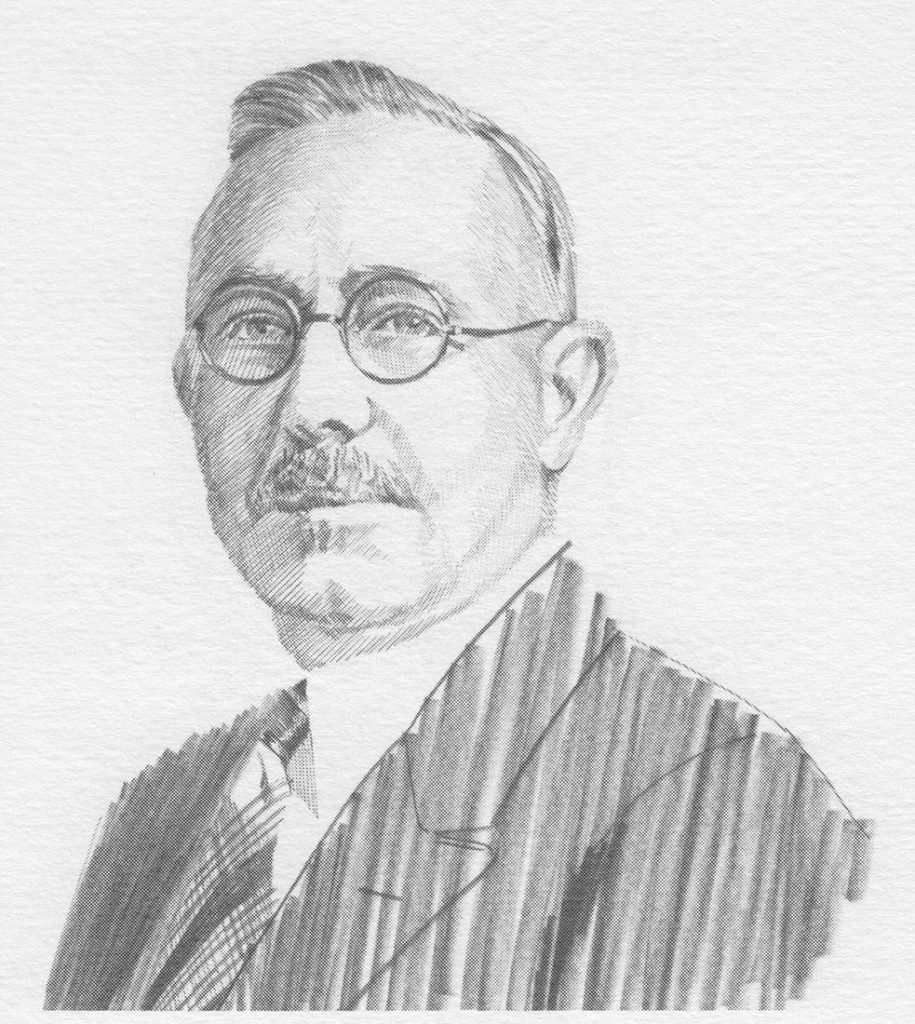
The Bellingrath brothers, William and Walter, were some of the first Coca-Cola bottlers in the Southeast. Born in Atlanta, Georgia, on January 30, 1868, William Albert Bellingrath was the sixth child and fourth son of Leonard and Catherine Jean McMillan Bellingrath. His brother, Walter Duncan Bellingrath, was born the following year on August 6, 1869. In 1882, the family moved to Castleberry, Alabama, where the young William lived until he sought a livelihood in the retail grocery business in Anniston. By 1901, he had become manager of the commissaries of the Woodstock Coal and Iron Company, which founded the city.
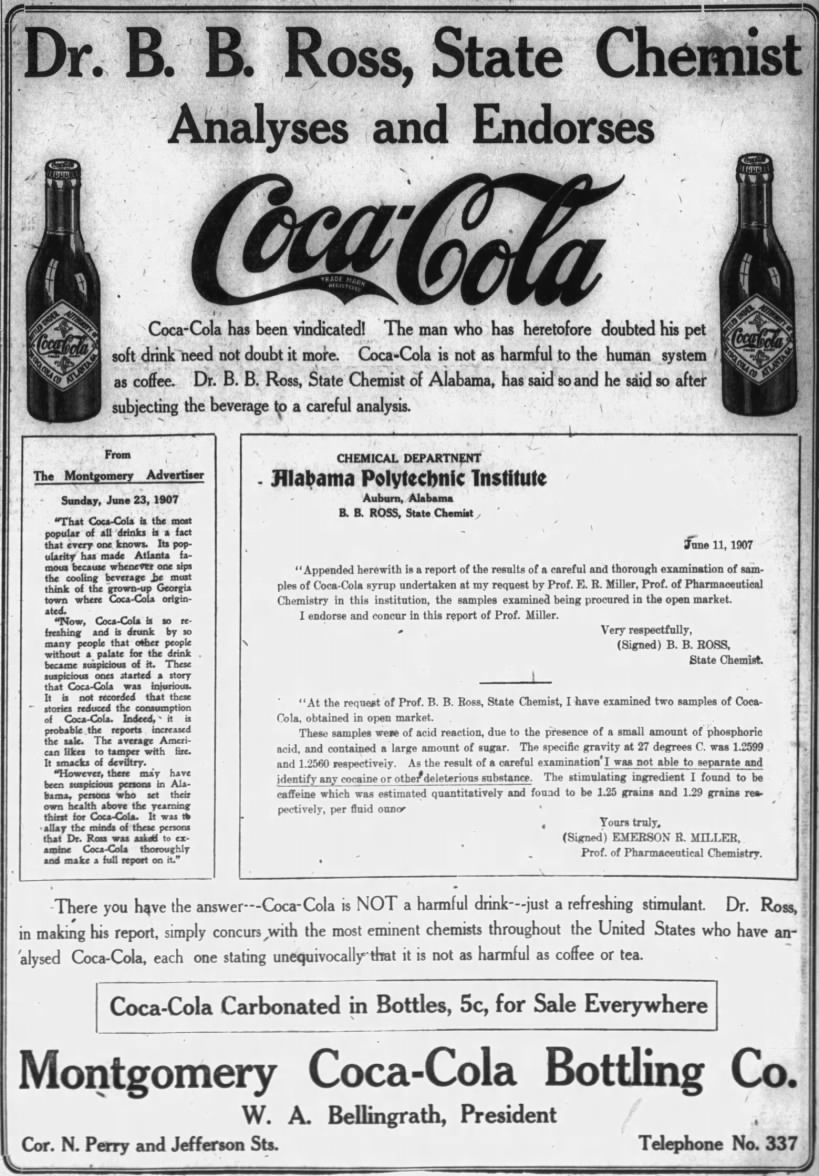
Back in Atlanta, the fledgling Coca-Cola Company, owned by Asa Griggs Candler Jr., had established a policy of leaving the bottling and distribution of Coca-Cola to local companies under a franchise. Having established a mercantile business in Montgomery and with the growing demand for a new beverage, William and Walter purchased the Montgomery Coca-Cola Bottling Company in June 1903 from C. V. Rainey. This exchange included a bottling plant on North Perry Street and another in Selma, Alabama, as well as the distribution rights to Coca-Cola within a seventy-five-mile radius of the city.
Pioneer of the Bottling Industry
William Bellingrath was a pioneer in the Coca-Cola bottling industry with a forward-thinking approach that modernized the Southern industry. He was an early adopter of delivery trucks and cutting-edge plant machinery, transforming his operation into a model facility by 1926. A respected industry leader, he also headed the Coca-Cola Bottlers’ Association as president in 1916. Their success eventually led to the purchase of the franchise in Mobile, where Walter assumed ownership of its operations.
William Bellingrath served as director of the First National Bank of Montgomery and helped establish its importance in the economic life of the city. A dedicated civic leader, he remains the only person in Montgomery’s history to serve four terms as Chamber of Commerce president. Under his guidance, the Chamber spearheaded transformative projects such as the establishment of Maxwell Field’s tactical school, the growth of the region’s dairy and meat industries, and the development of Kilby Prison and various manufacturing plants.
He was known for his modesty and rarely took credit for his achievements. In a 1937 tribute published in The Coca-Cola Bottler, his longtime friend Jesse B. Hearn wrote, “the smokestacks of Montgomery, improved agricultural conditions of Central Alabama, growth of financial institutions in Montgomery, the development of better markets in Central Alabama, and many other pieces of evidence of progress (were) but measures of the activity and intelligent efforts of a splendid, forthright citizen who, though a civic leader, was always willing to give credit to others for achievements that were largely results of his endeavors.”
Philanthrophy
William was a philanthropist who frequently donated to institutions and local charities, so much so that the extent of his generosity was largely unknown to his close friends. Among his most notable philanthropic efforts were the significant gifts he and his wife made to Huntingdon College, where Bellingrath Hall now stands as a namesake in their honor.
A deacon and elder in the Presbyterian Church, he gave generously of his time and means to the church and to the Presbyterian Home for Orphans at Talladega. He was a contributor to and a trustee of Agnes Scott College in Atlanta. At his death on March 11, 1937, William Bellingrath was described as “a deacon and elder of the Presbyterian Church… who walked daily in the faith of a living God… a man who ‘walked unafraid through a long and useful life.”
Foundation of the Memorial Presbyterian Church
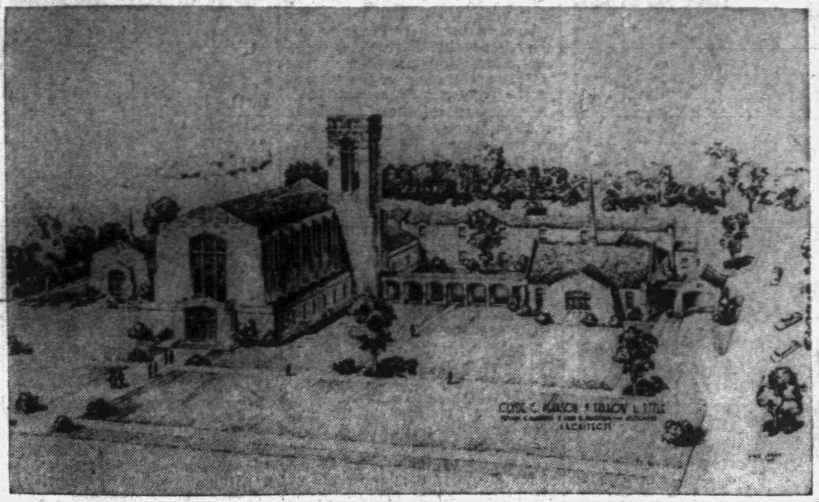
Long after his death, his wife, Mary Nesbitt Elmore Bellingrath, donated a five-acre parcel of land on South Court Street to the Presbyterian Church, which, at the time, was an unpopulated outskirt of Montgomery. The first building of the Memorial Presbyterian Church was completed on December 22, 1947, at a cost of approximately $15,000.
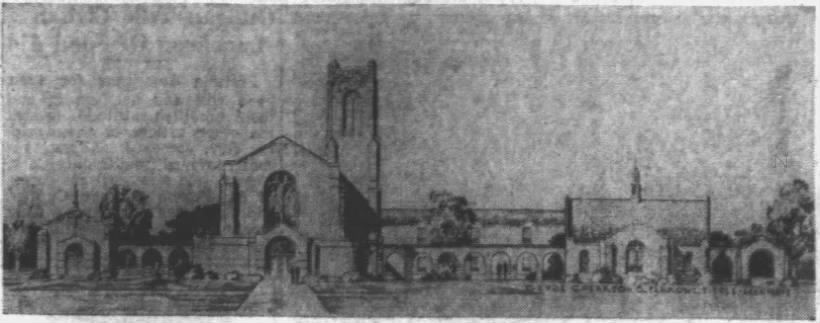
Constructed of Crab Orchard stone with clay tile roofing, it was designed in a simple Gothic style by the prominent Montgomery architectural firm Pearson & Tittle, whose works include the historic Grove Court Apartments, Hilltop Arms Apartments, and Highland Theatre. Although originally small, this meeting house was expanded over the next few years as part of a master plan that would eventually include a 600-seat sanctuary, meeting hall, Sunday school, and wedding chapel.
Expansion and Construction of the Sanctuary
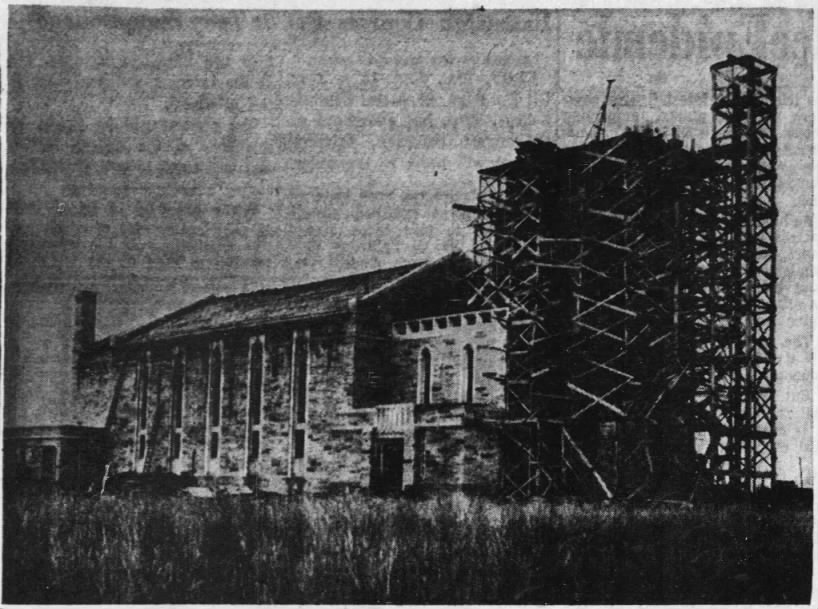
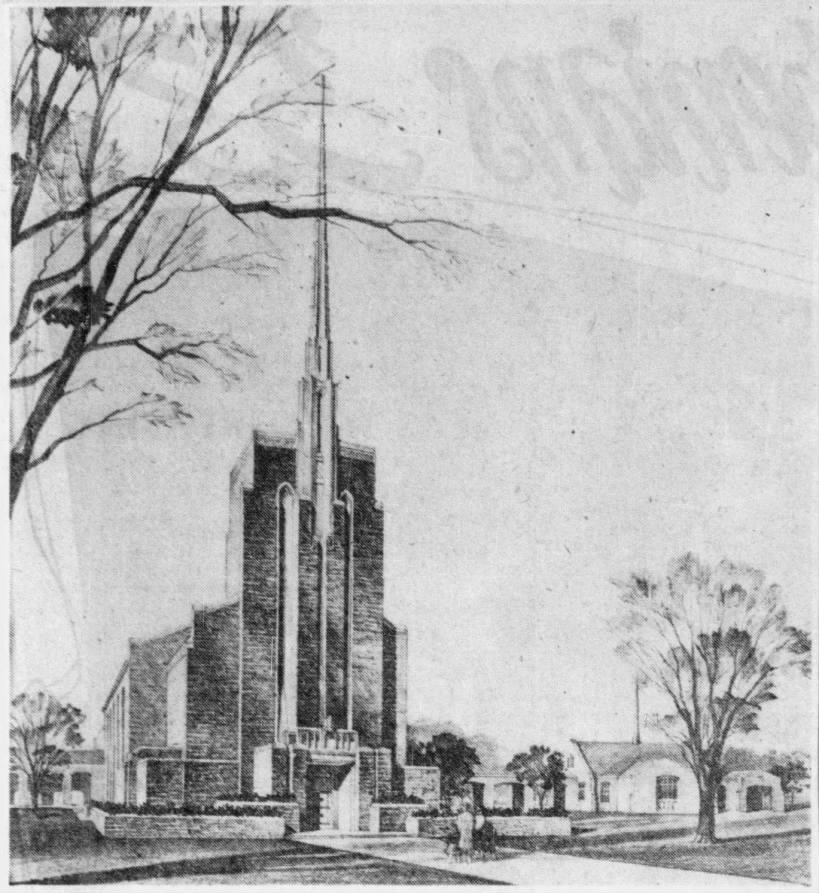
By 1952, the congregation had grown to such an extent that it was decided that it was time for a larger and permanent sanctuary. Pearson & Tittle were again chosen to design the new sanctuary, along with nationally renowned church architect Harold E. Wagoner as a consultant. Wagoner had recently worked with the Presbyterian Church on designing the Trinity Presbyterian Church on South Hull Street. A building committee consisting of Gordon Meriwether as chairman, Ben B. Mabson, Donald M. McInnis, and P. C. Campbell, was selected to work with the architects in its planning. The builder was Bear Brothers Company.
Built for $300,000, the new building was constructed of Briarhill stone from Ohio and Alabama limestone; its tower and spire measure 110 feet in height. The cornerstone of the new sanctuary was laid on February 27, 1955, containing the history of the church, roll of charter members, a bible, and other important documents. It was equipped with a $30,000 Austin Organ donated by Mary Bellingrath as a memorial to her late husband. Mrs. Bellingrath died the following day, on February 28, 1955.
The original building, located just north of the sanctuary, was converted for educational purposes, including Sunday school classrooms and nurseries. The two buildings were connected by a rear wing containing a fellowship hall and a kitchen, and by a covered cloister near the front, forming a courtyard in the center of the complex. Although a small chapel for weddings and other small gatherings was originally planned on the south side of the complex, it was never built.
Membership grew quickly to 875 active members by 1963. The first wedding to take place in the sanctuary was that of Joseph and Junera Stone in 1955, and the first baptism was that of Stewart May.
Desegregation and the Civil Rights Movement
According to the Office of the Chaplain, “it was the first church in Montgomery to desegregate by offering open seating to members of both races.” This statement stands in contrast to other Presbyterian churches in the South, which opposed desegregation and the Civil Rights Movement, especially the admission of all Freedom Riders. This became a factor in the division of the Presbyterian Church in the United States and the formation of the Presbyterian Church of America (PCA). Adhering to Christ’s mission of reconciliation and justice, Memorial Presbyterian Church was just one of four churches in the city to maintain an open-door policy for all Christian worshippers.
Decline
By the late 1990s, Memorial Presbyterian Church membership was in decline, and it had vacated its property on South Court Street and was meeting at a local YMCA. In 1998, Reverend William Vanderbloemen came to Memorial, and under his leadership, membership tripled, allowing the congregation to move to a new location on the east side of Montgomery on Bell Road.
As for its former South Court Street location, the sanctuary is currently occupied by the Saint James Baptist Church #2, but the Sunday school building sits derelict and heavily deteriorated.
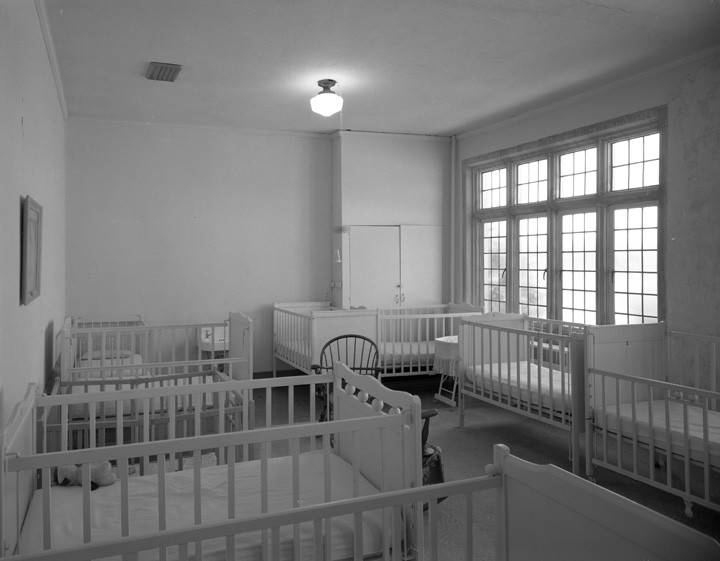
Photo Gallery


