

| City/Town: • Talladega |
| Location Class: • Cemetery • Residential |
| Built: • 1840 | Abandoned: • 1956 |
| Status: • Burned Down • Private Property |
| Photojournalist: • David Bulit |
Major Walker E. Reynolds
Mount Ida, also known as the Walker Reynolds House, was an antebellum mansion built by wealthy planter and promoter of Talladega and Talladega County, Major Walker E. Reynolds. Reynolds was born on August 28, 1799, in Warren County, Georgia, and came to Alabama in 1832. He settled among the native Creek Indians in Talladega County, buying his first tract of land from a Creek Indian by the name of Oche-hadjo. By the end of that same year, the United States purchased the remaining land owned by the Creek nation for $210,000 and “other valuable considerations” in the Cusseta Treaty.
By the late 1830s, nearly all Native Americans had been forced to move from Alabama to Indian Territory in what is now Oklahoma. Talladega County was established on December 18, 1832, from land ceded by the Creek Indians, with the founding of Talladega occurring in January 1834. Land sales did not take place until the Spring of 1834, which is when Walker Reynolds purchased the title to the land he had settled on. He would eventually come to own some 13,000 acres of land and several hundred slaves to work his vast cotton interests.
In 1849, he was elected to the legislature on the Whig ticket, and during his service there, he succeeded in securing the passing of a charter giving to the county a railroad running through its entire length, then known as the Alabama & Tennessee River Railway, and afterward as the Selma, Rome and Dalton Railroad. After the session of 1849, he was not again in public life but engaged in planting and milling, and the buying and selling of public lands.
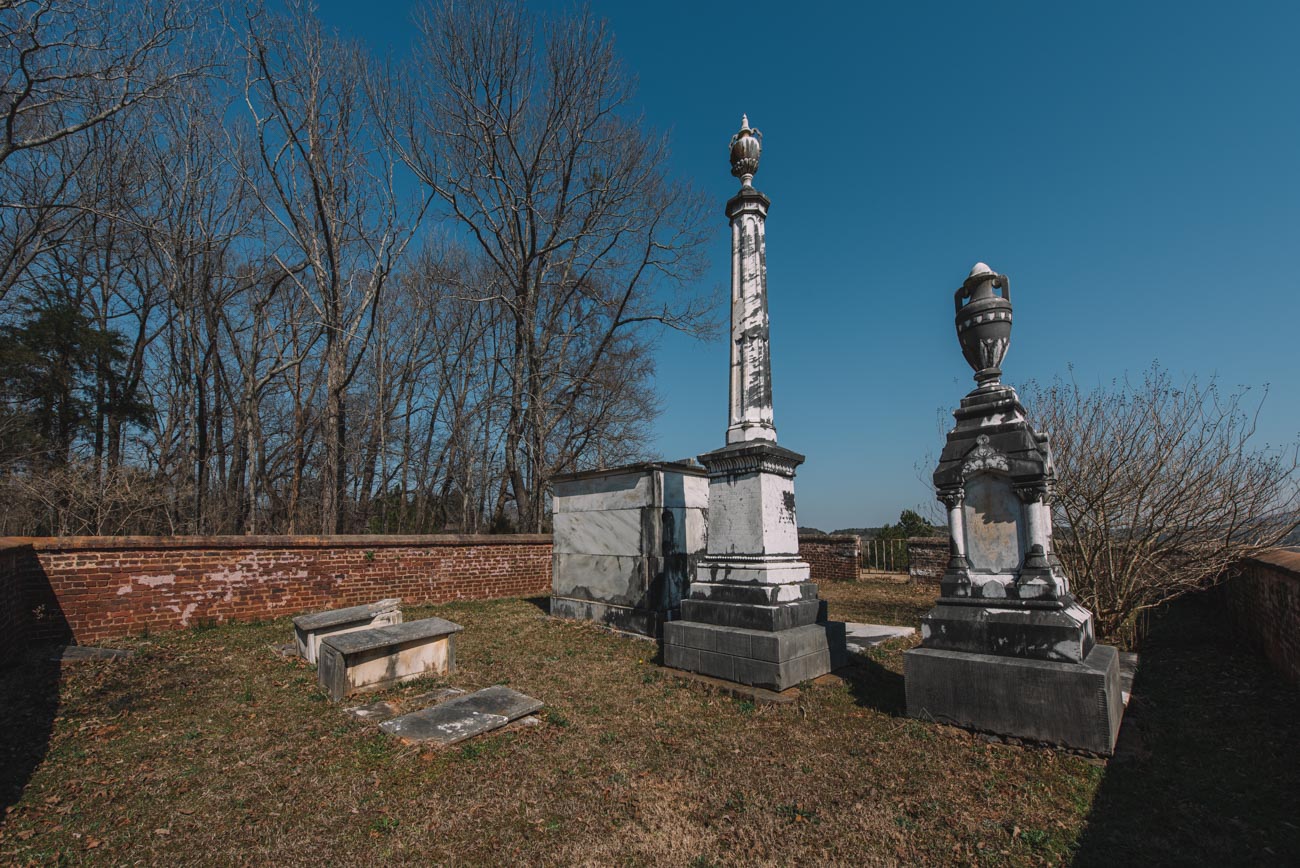
Before the start of the Civil War, he opposed secession but went with his adopted state when it seceded. Because of his age, he could not enter the Confederate States Army, but he was largely involved in supporting the needy families of the Confederate soldiers during the war and raised and equipped a company at his own expense. He was known by the title of major, presumably, from his connection with the militia. Union cavalry forces raided the plantation during the war, stripping the smokehouse and storerooms, and made off with 32 mules and horses. Reynolds died on January 18, 1871, and is buried in the family cemetery at Mount Ida.
Mount Ida
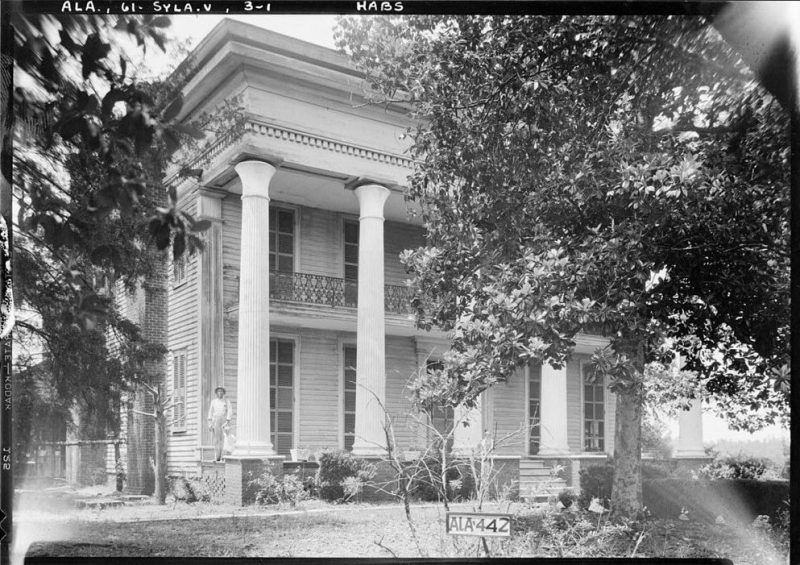
The Mount Ida Plantation house was built around 1840, located halfway between Sylacauga and Talladega. The fourteen-room mansion was constructed in sections until the portico was completed in 1858. The Greek Revival mansion featured a monumental veranda, edged by six fluted columns and topped by inverted bell-shaped capitals (a motif extremely rare among antebellum homes in the state). The six front columns were constructed of red brick and covered with hard plaster. The large windows on the balcony could be turned into doors, providing access from the inside of the house as well as cool ventilation in the summer months. There was amethyst glass in the sidelights and transoms.
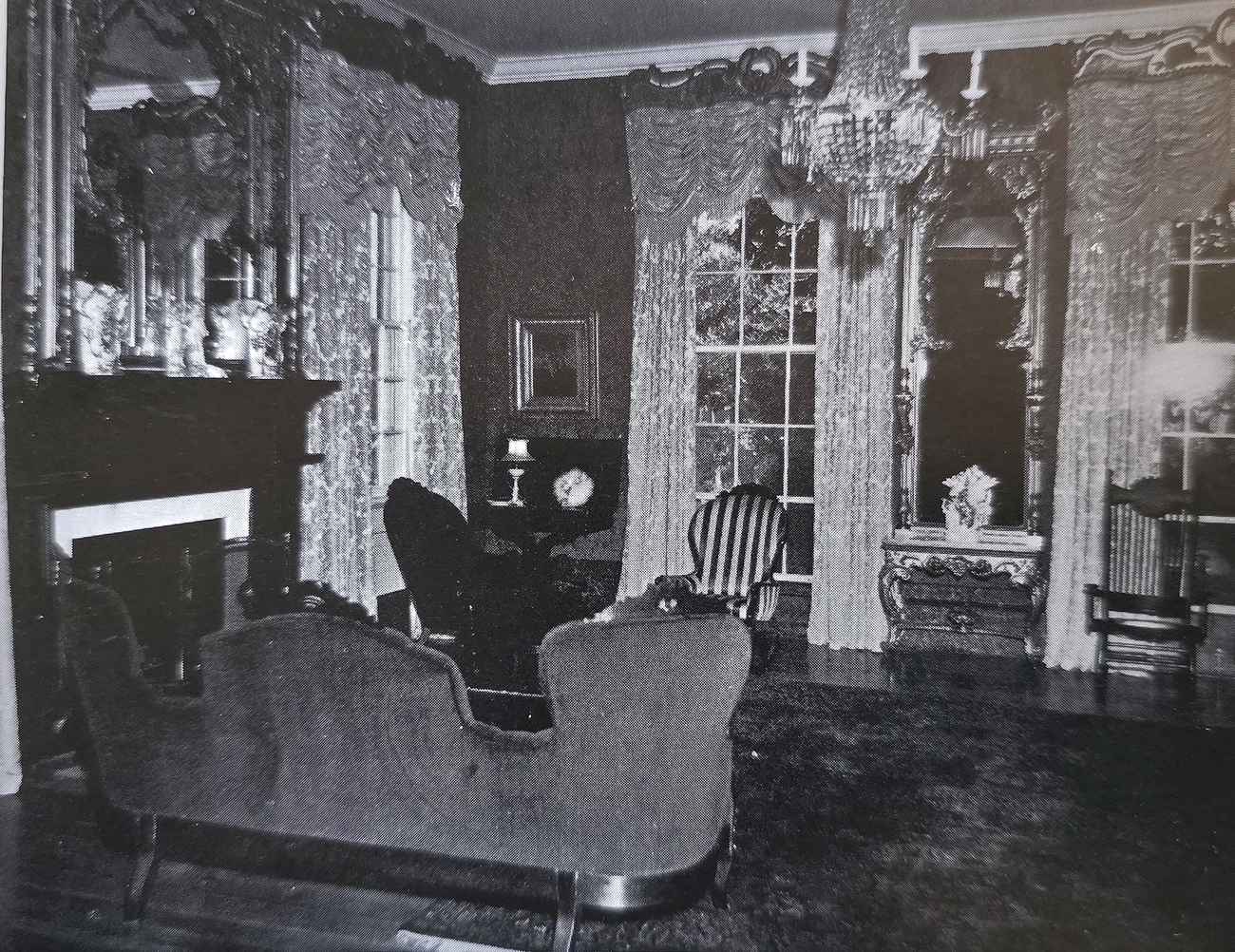
The furnishings in the house were purchased on a trip to New York City in 1859. The front parlor was supposedly called ‘The Blue Room’ and was inspired by the Blue Room in the White House.
During the Civil War, the plantation was devastated when Rousseau’s Raiders invaded Talladega and rode on to Mount Ida, where they plundered the pantries and smokehouse. The Union troops also took with them the slaves and approximately thirty-two mules and horses. The gin warehouse containing two hundred bales of cotton was destroyed, and the fields of wheat were burned.
The widow, Hanna Reynolds, managed the plantation until she died in 1890, at which time it was divided among the descendants. Mount Ida remained in the Reynolds family until 1922, when it was sold, and all the original furnishings were, again, divided among the descendants.

Birth of a Nation
The home was reportedly a location for the 1915 silent film Birth of a Nation, widely criticized, even upon its release, for its promotion of white supremacy and Lost Cause ideology. In 1949, the Kent family purchased the mansion and began a restoration to return Mount Ida to its former glory. According to Mr. and Mrs. Raleigh Barbee Kent, director D. W. Griffith directed a battle scene from the house’s balcony using a series of telephone wires with direct lines to his cameramen.
However, Seymour Stern, D. W. Griffith’s official biographer, maintained that no scenes were ever filmed in the South. He explained that Griffith made a trip to Talledega with his friend and actor, Henry B. Walthall, and that it is quite possible that Griffith made a personal appearance at the house. Stern surmised that this is where the legend came about.
Destruction
On the afternoon of August 13, 1956, Mount Ida was struck by lightning and quickly burned to the ground. According to reports, Lena Reynolds, the family’s maid, was the only person in the house when lightning struck the house. After 20 minutes, she noticed the house was on fire and rushed out into the storm to fetch help from the Kent dairy barn. Family members and workers rushed into the house to save some articles of furniture until the house’s roof caved in. All that remains of the house are the front brick-and-plaster columns. The Mount Ida cemetery is located on private property.
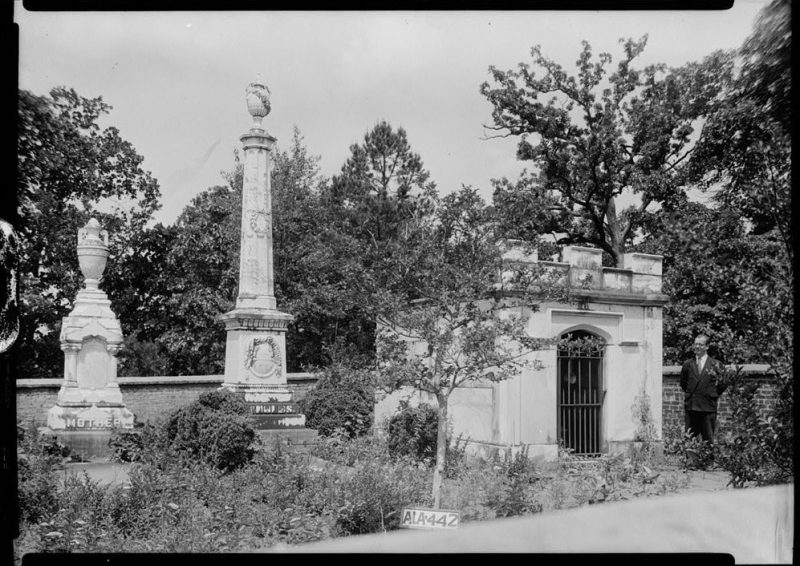
Photo Gallery


References
Talladega Daily Home. (1956, August 14). Lightning-Caused Flames Destroy Storied Mt. Ida
Owen, Marie; Owen, Thomas McAdory. (1921). History of Alabama and Dictionary of Alabama Biography v.4